
TL;DR: Community Summit is where most attendees actually shop for a Microsoft partner, whether they’re actively looking for a new one or quietly wondering if their current partner is still the right fit. Both are the same conversation.

With hundreds of partners in one building, it’s easy to collect business cards and generic pitches instead of real answers. This is why: why staffing continuity matters more than the pitch, why full-stack coverage beats a single-product specialist, why what happens after go-live is the real test, and why AI is probably already sitting unused in your stack. Grab our downloadable Summit checklist for the exact questions to ask at each booth.

MISTAKE 1 OF 10

Walking In Without a Specific Goal

“Exploring options” isn’t a goal, and it’s the reason so many Summit conversations feel interchangeable by the third booth. A real goal is specific: your Business Central and CRM data living in two separate systems, or reporting that takes days instead of hours. The moment you name the actual problem, a partner has to respond to it directly instead of running their standard demo.

A specific goal changes every booth conversation from a product pitch into a real diagnosis, and it’s the fastest way to tell which partners at Summit are actually listening to you.

This is also the difference between the two personas walking the floor. Someone shopping for a first partner needs a goal to filter an overwhelming number of options. Someone reassessing a current partner needs a goal to name, specifically, what’s no longer working, which is a harder, more useful conversation than a vague sense of dissatisfaction.

MISTAKE 2 OF 10

Not Confirming Who Will Actually Staff Your Project

The person demoing a solution at a Summit booth is often not the person who will build it. It’s common for a senior consultant to run the floor conversation and hand the actual build to a different, more junior team back home. Neither is a red flag on its own, that’s normal at almost every firm. The problem is when you don’t find out until you’re three months into a project with a team you never met during the sales process.

A firm that’s thought seriously about that gap will talk about it openly. A firm that hasn’t will change the subject.

MISTAKE 3 OF 10

Assuming Full-Stack Coverage Without Asking for Proof

A lot of partners at Summit are genuinely excellent at one product and thin everywhere else. That’s fine if you only need one product. It becomes a real problem the moment your ERP, your CRM, and your reporting need to work together, which is most of the time.

Here’s what that actually looks like day to day: a new customer gets typed into the CRM by sales, then typed again into the ERP by operations, because nothing connects the two. Every typo introduced at that second entry point becomes a shipping error or a billing dispute weeks later. This isn’t rare or small.

Gartner estimates poor data quality, much of it caused by exactly this kind of disconnected system, costs the average organization $12.9 million a year, and Forrester research puts the time cost at roughly 12 hours per employee, per week, spent searching for data trapped in systems that don’t talk to each other.

A partner can genuinely sell both ERP and CRM without those two teams talking to each other internally. “We have both” and “both teams talk to each other daily” are very different answers, and only one of them means your systems will actually work together once you’re a client instead of a booth visit.

We wrote about why this matters more now than it used to in The Microsoft Stack Is No Longer Modular And That Changes What Clients Need From Their Partner since Microsoft’s own products are increasingly built to work as one connected platform, not separate tools.

MISTAKE 4 OF 10

Ignoring What Happens After Go-Live

Your relationship with a Microsoft partner doesn’t end when the system goes live. You’ll need tuning, ongoing training for your team, and new features rolled out as Microsoft ships them. You’ll feel a partner’s real value in month six, not week one, which is exactly why the sales pitch tells you so little about what you’re actually buying.

Anyone can say they’ll take care of you after go-live. Ask them to walk you through the actual methodology, step by step, what happens in week one, month one, and month six, and who specifically owns each part. A real answer sounds like a process. A vague one sounds like a promise.

MISTAKE 5 OF 10

Trusting a Microsoft Solutions Partner Badge Without Confirming Competency

Here’s a scenario that plays out at Summit every year: a partner’s booth banner says “Microsoft Solutions Partner.” You assume that covers whatever you need. Three months into a project, you find out their designation was for Modern Work, Teams and email migrations, not Business Applications, which is what your ERP project actually needed. The badge wasn’t wrong. You just didn’t ask which one it was.

Microsoft retired the old Gold and Silver competency system. Partners are now evaluated under the Microsoft AI Cloud Partner Program, and a Solutions Partner designation is earned through a Partner Capability Score, a 100-point scale across three categories: Performance (net customer growth), Skilling (team certifications), and Customer Success (usage growth and successful deployments). A partner needs at least 70 points, with a minimum in each category, to earn a designation.

Full details are available in Introduction to Solutions Partner designations  by Microsoft.

There are six separate designations, including Business Applications, Data & AI, and Modern Work, and a partner can hold one without holding the others. The fix for the scenario above is one sentence: “Which of your six designations covers this specific project?” Ask it before you sign anything, not after.

MISTAKE 6 OF 10

Accepting AI Claims Without Seeing Them Demonstrated

Every partner at Summit will tell you they’re “AI-first.” That word doesn’t mean much on its own. What matters is whether they can show you AI actually doing something, not just describing it.

Ask what’s already inside the Microsoft tools you’re paying for right now. Most companies are underusing Copilot, using it to chat, not connecting it to anything that actually runs their work. If a partner can’t show you a real example of Copilot handling a task end to end, that’s a gap worth noting.

Your Microsoft stack likely already includes the AI you’re asking a partner to sell you. The right question isn’t “what AI do you offer,” it’s “what’s already sitting in my stack that nobody’s turned on yet.”

The same goes for Power Platform. Ask how a partner would build something your ERP or CRM doesn’t already do, and how AI factors into that build, not as a separate add-on, but as part of the same system. A partner who treats AI as its own product line, disconnected from the rest of your stack, will hand you the same fragmentation you’re trying to walk away from.

MISTAKE 7 OF 10

Not Asking How a Partner Bills or How Fast They Actually Deliver

How a partner operates day to day tells you just as much as what they can build. Ask how they bill for ongoing work, a flat monthly model behaves very differently than being charged by the hour every time something needs attention, and how fast they actually move once you say yes. A build that should take days shouldn’t take weeks because of how a firm is structured internally.

Be just as wary of the opposite problem. A suspiciously fast timeline, promised on the spot, with no explanation of how, is its own red flag. Ask why it’s fast: a real answer names the actual mechanism, a pre-built framework, a specific team already in place, not just a date meant to win you over before anyone’s looked at your actual systems.

MISTAKE 8 OF 10

Comparing Quotes Instead of Total Cost of Ownership

Cost matters, but it’s the wrong first filter, especially when you’re comparing a stack of quotes gathered from a single afternoon on the floor. The cheapest quote often reflects a narrower scope, a junior team, or a support model that ends the day the system goes live.

Gartner estimates the true five-year total cost of ownership for an ERP system typically runs 3 to 4 times the initial software quote, once implementation, support, upgrades, and internal staff time are counted. The number on the one-pager you walked away with at Summit is rarely the number you’ll actually pay.

That gap isn’t always hidden fees. Often, the real project ends up more customized than the initial quote assumed, built around your actual workflows, not a generic template. That’s not automatically a red flag. The red flag is a partner who didn’t set that expectation upfront, and let you find out three months in instead.

MISTAKE 9 OF 10

Not Asking Whether Full-Stack Coverage Is Actually In-House

“Full stack” can be technically true and still mean your project gets handed off. Some partners genuinely cover ERP, CRM, and Power Platform on paper, but subcontract part of that work to a separate company once the contract is signed. Your point of contact stays the same, but the people actually building your Power Platform app or your AI integration have never talked to the team that built your ERP.

Ask directly: is this built in-house, by people on your own team, or does part of this get handed to another company once we sign? The answer changes who’s actually accountable when something between systems breaks.

MISTAKE 10 OF 10

Accepting a Generic Case Study Instead of One From Your Industry

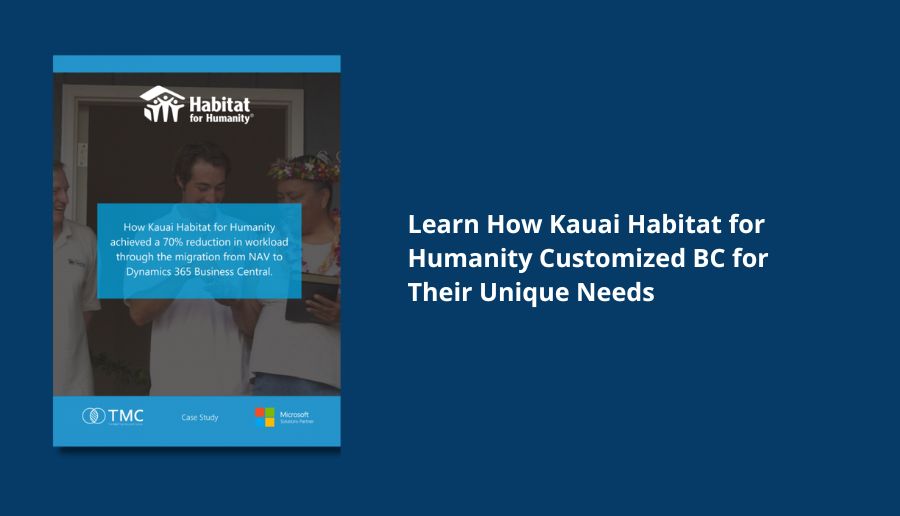
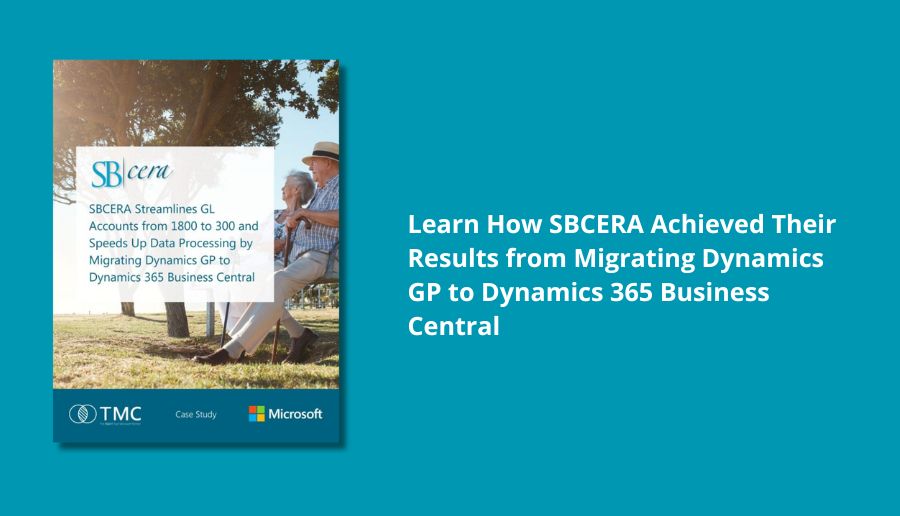
A polished case study proves a partner can execute for someone. It doesn’t prove they can execute for you. Ask for a reference from your industry and roughly your company size, since that’s the comparison that actually predicts how your project will go, not a logo wall.

Bring This to Summit

We’ll be at Community Summit all week, running two hubs built around the exact questions in this post. The AI Copilot Hub, in the Volunteer Section, is where we show you what’s already sitting unused in your Microsoft stack, Copilot connected to real work, not a chat window. The Power Platform Hub, in the Tennessee Section, is where we build the thing your ERP or CRM doesn’t do yet, in front of you, with the same team that trains other partners on Power Platform. Bring the questions from this post. We’d rather answer them in person than have you guess at the answers from a booth banner.

Want the short version to carry onto the floor? The Downloadable Summit Checklist has all ten questions, ready to print.

And if you haven’t locked in your Summit plans yet, everything you need, registration, discount codes, and where to find us below.

Frequently Asked Questions

What’s the most important question to ask a Microsoft partner at Community Summit?

Ask who, by name, will staff your project and whether that person will be available for its full duration. This single question exposes more about a partner’s real capacity than any booth demo, and it’s easy to ask right there on the floor.

How long does a typical Business Central or CRM implementation take?

Timelines vary by scope, but most mid-market implementations run four to nine months. Be cautious of any partner who gives a firm timeline before understanding your specific processes.

What is a Microsoft Solutions Partner designation?

It’s a Microsoft-awarded credential that replaced the old Gold and Silver competency system. Partners earn it by reaching a Partner Capability Score across performance, skilling, and customer success, and it’s specific to one of six solution areas.

Should I switch Microsoft partners if I’m unhappy with support?

Switching is more common, and less disruptive, than most companies assume. Your data and live system stay intact through a transition. The real risk is staying with a partner who no longer prioritizes your account.

How do I know if a partner’s full-stack coverage is actually in-house?

Listen for hesitation when you ask who specifically builds the Power Platform or AI portion of a project. A partner with a genuinely in-house team will name people and describe how those teams hand off work to each other. A partner who’s subcontracting will usually shift to talking about the outcome instead of the people doing the work.

Does a partner need to specialize in one Microsoft product to be good at it?

No. Deep product knowledge matters, but Microsoft’s own products are built to work together now. A partner who only understands one piece of your stack will eventually create the same silos you’re trying to remove.

What should I ask a partner about AI specifically?

Ask them to show you, not tell you, something AI is already doing inside a real Microsoft environment, ideally connected to your ERP or CRM data, not a standalone chatbot demo. Most companies already have more AI available in their Microsoft 365 and Power Platform licenses than they’re using.

What’s a reasonable support model to expect after go-live?

Look for a partner who checks in proactively on a regular cadence, not one who waits for you to submit a ticket when something breaks.

Key Takeaways

  • Define your goal first. Walk into every conversation with two or three specific problems, not a general interest in “exploring options.”
  • Ask who staffs the project. Get names, availability, and a plan for what happens if someone leaves mid-project.
  • Full-stack coverage matters, but confirm it’s in-house. A partner who’s strong in one product but thin everywhere else will eventually create new silos, and “full stack” sometimes means part of your project gets subcontracted to a separate company.
  • Make them show you AI, not describe it. Ask what’s already available in your Microsoft 365 and Power Platform licenses before paying for something new.
  • Post-go-live support is the real test. Ask what proactive support looks like six months in, not just what happens during implementation.
  • Understand designations before trusting a badge. Ask which of the six specific Solutions Partner designations applies to your project.
  • Compare total cost, not just the quote. The cheapest option often reflects a narrower scope or a support model that ends at go-live.
  • References should match your profile. Ask for examples from your industry and company size specifically, not a generic case study list.