
TL;DR
- AI is no longer about single-use tools—it’s a platform shift across the Microsoft ecosystem.
- Azure AI Foundry now includes evaluation metrics (groundedness, relevance, completeness) to help businesses choose the right AI models.
- GitHub Spark (public preview) accelerates app development by turning natural-language prompts into full-stack apps.
- Microsoft Fabric and Databricks show how data and AI must move together to reduce duplication, improve governance, and enable intelligent apps.
- The companies seeing the biggest wins are modernizing their data estates and adopting a holistic AI strategy, not piecemeal solutions.
- TMC helps organizations move from AI experimentation to measurable impact with readiness reviews, data modernization, and responsible deployment.
Why the Microsoft AI Tour Toronto Proved AI Is a Platform Shift, Not Just a Tool
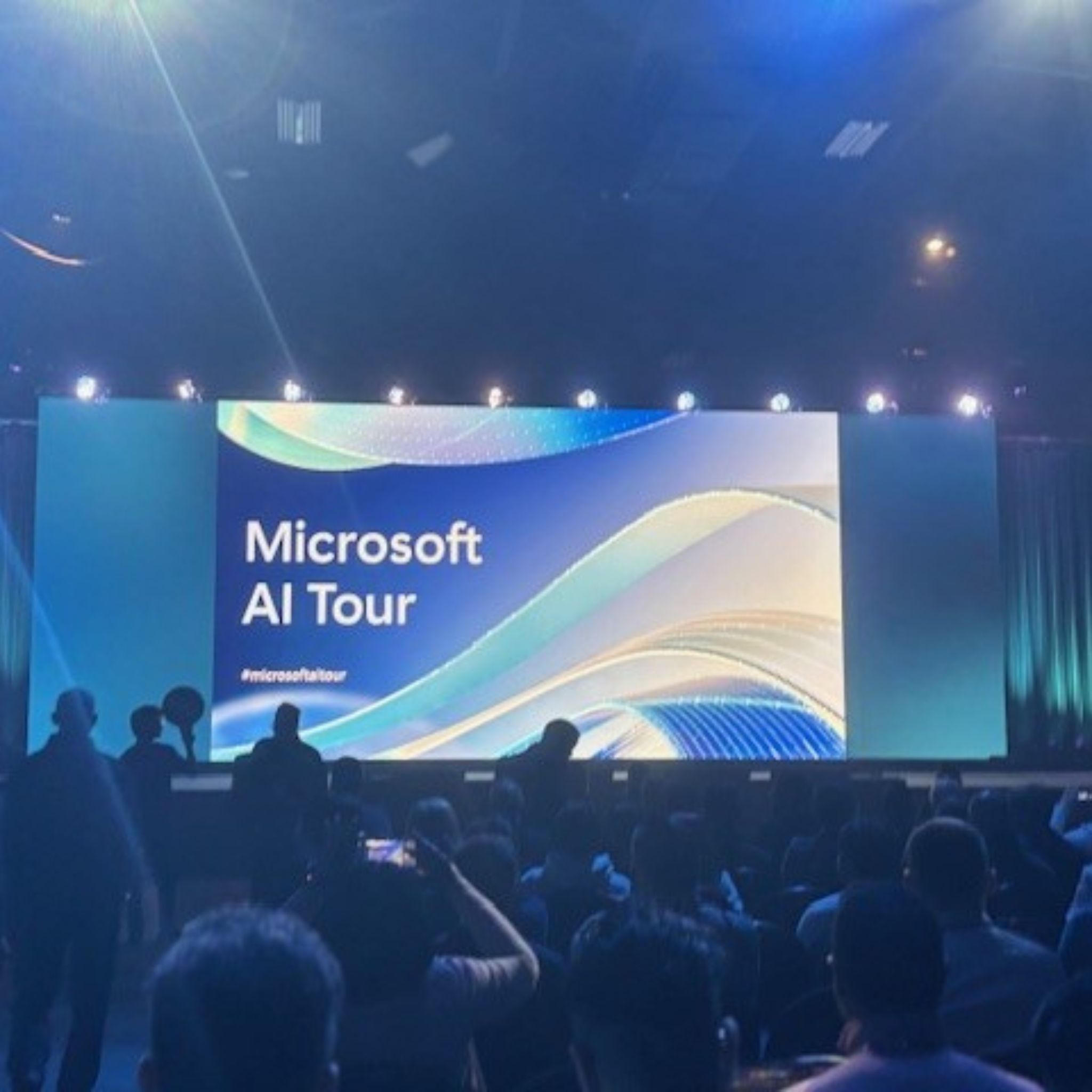
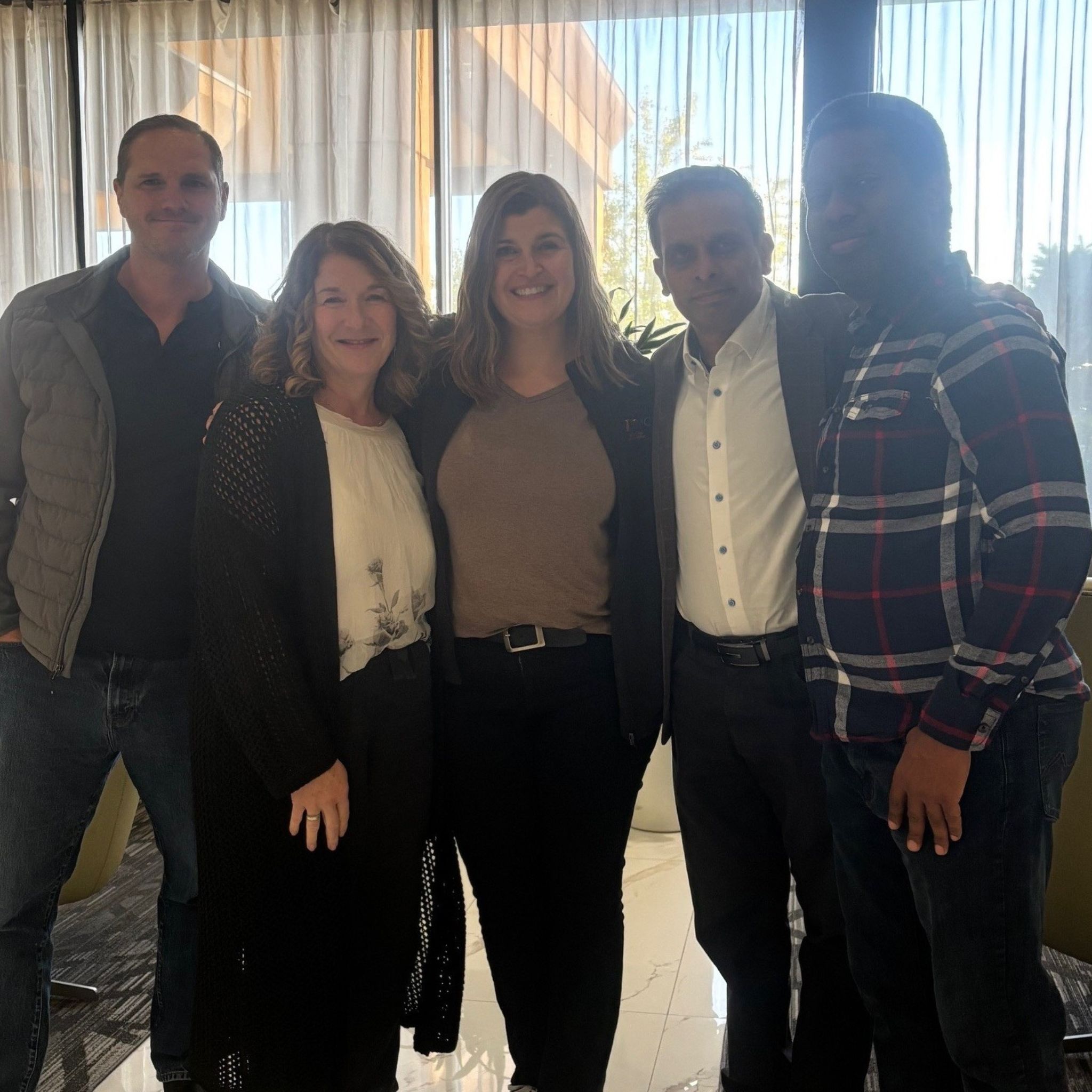
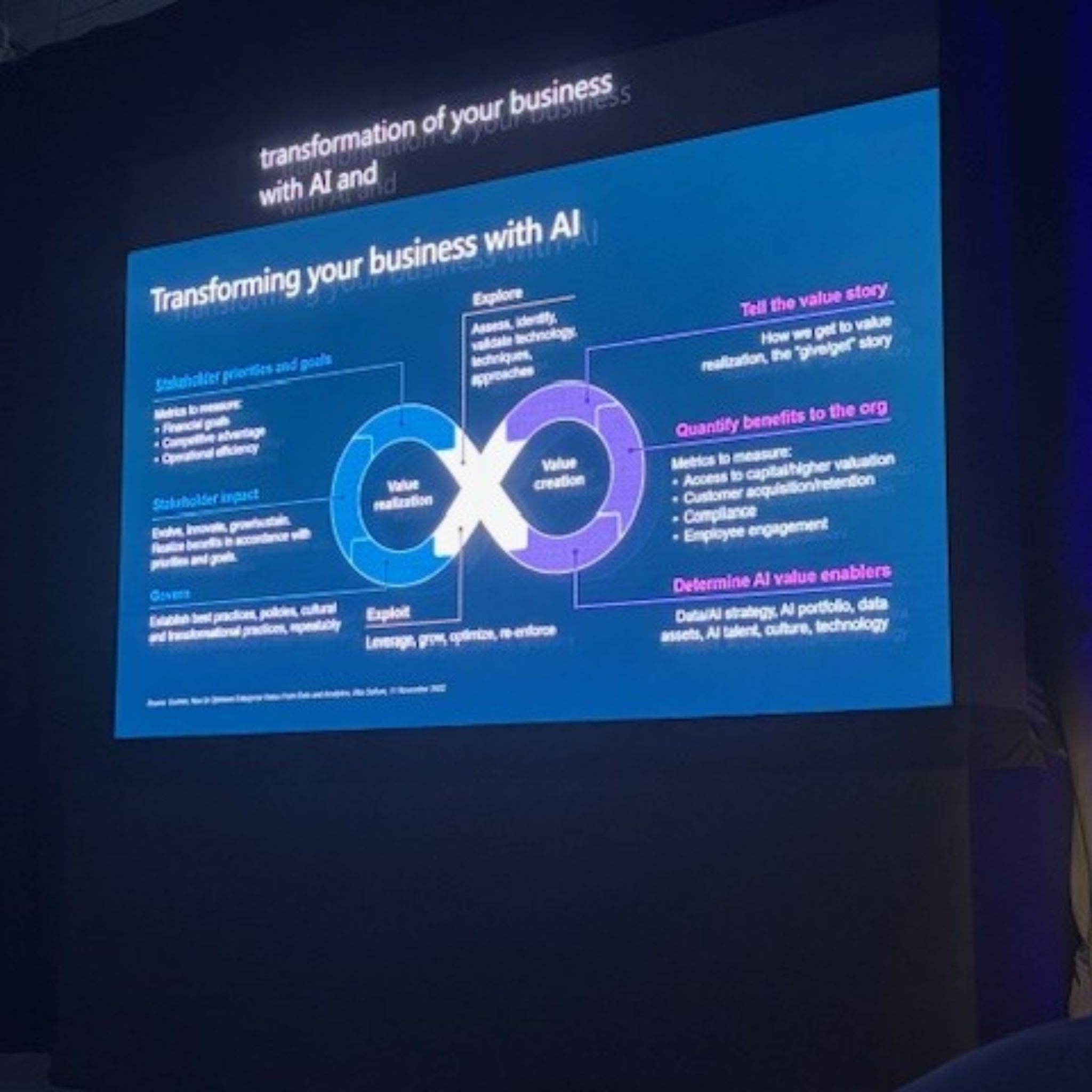
AI is no longer a point solution—it’s a platform shift. That was the clear message at the Microsoft AI Tour in Toronto, which brought together partners, clients, and Microsoft experts. The focus wasn’t on single-use AI tools, but on how the entire Microsoft data and application ecosystem is being reimagined to deliver scalable, enterprise-ready AI adoption.
Azure AI Foundry Innovations: Model Evaluation, Metrics, and Real-World Use Cases
How Azure AI Foundry’s Groundedness and Relevance Metrics Improve Model Selection
One of the biggest surprises from the event was the innovation happening inside Azure AI Foundry. Microsoft has introduced a robust evaluation framework with built-in metrics for groundedness, relevance, and completeness.
This makes it easier to:
- Compare lightweight vs. reasoning-heavy models
- Achieve target quality without defaulting to resource-intensive models
- Deploy the right model for specific enterprise scenarios
GitHub Spark in Public Preview: Turning Natural Language into Full-Stack Applications
On the developer side, GitHub Spark (public preview) stood out as a game-changer. It allows developers to turn natural-language ideas into full-stack applications with one click. The result: faster proof-of-concept development while keeping a clear path to enterprise-grade deployment.
Microsoft Fabric and Databricks: Modernizing the Data Estate for AI Integration
Why Data and AI Must Move Together in a Modern Microsoft Architecture
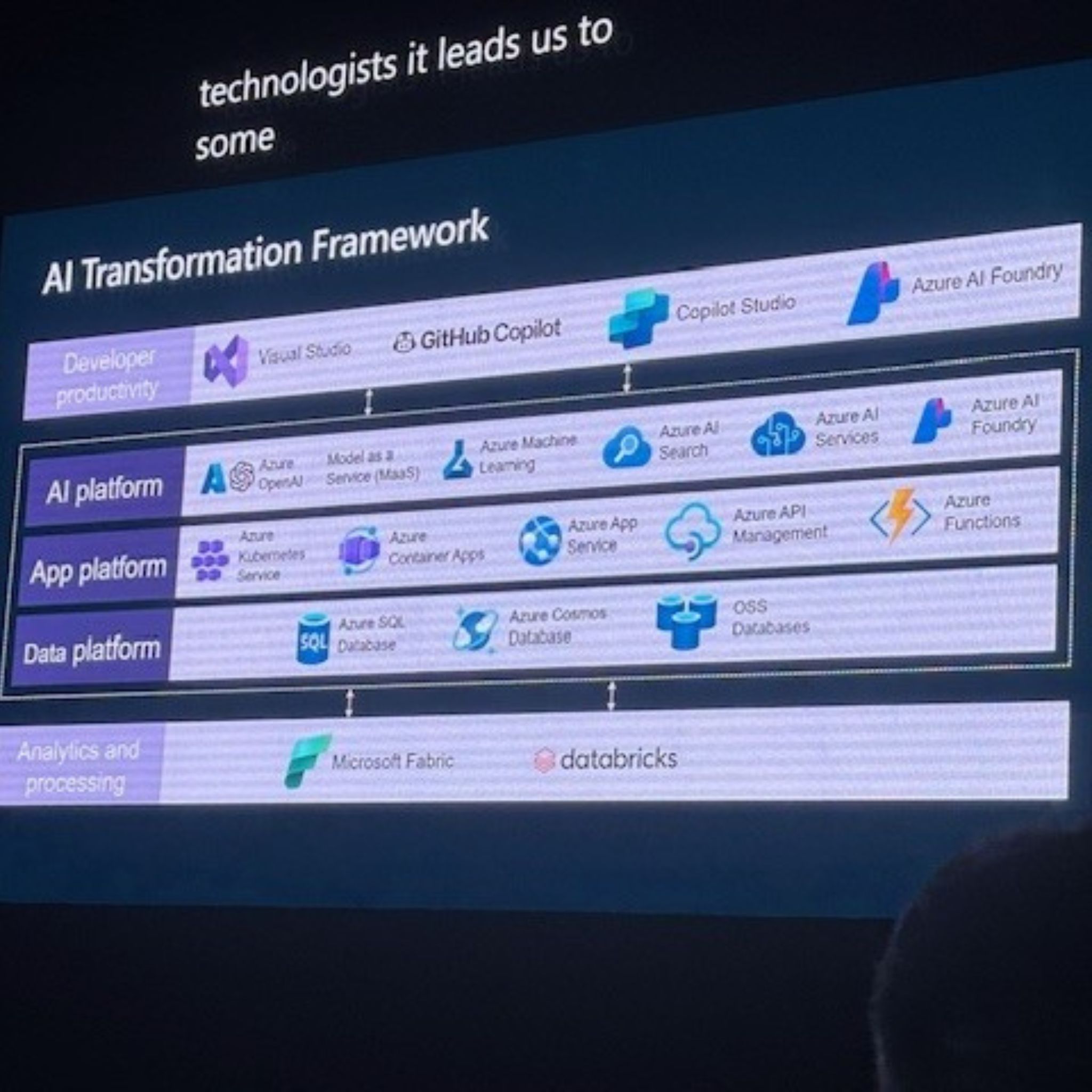
One of the most impactful sessions highlighted the synergy between Microsoft Fabric, Databricks, and Azure AI Foundry. The clear message: data and AI cannot be separated—they must evolve together.
Key takeaways included:
- Fabric OneLake and shortcuts: Reuse data without duplication, reduce latency, and avoid unnecessary load on ERP systems.
- Databricks interoperability: Use the same curated data for machine learning and business intelligence without building complex pipelines.
- Unified architecture: Ingest once, govern centrally, and accelerate intelligent app development.
Business Impact: What Integrated AI and Data Strategies Mean for Users
AI adoption isn’t just about solving one problem. It’s about rethinking how you store, access, and govern data so you can unlock insights and automation across the entire organization.
The companies seeing the most success aren’t just adding chatbots—they’re building the foundation for scalable, responsible AI adoption across ERP, CRM, analytics, and beyond.
Debunking the Myth: AI Isn’t About Solving One Problem at a Time
A persistent myth in the market is that AI should be applied to “one problem at a time.” The reality is very different. The biggest business impact comes from a holistic approach—aligning data strategy, governance, and AI capabilities at the same time.
This is where Microsoft’s integrated platform, combined with strategic partners like TMC, drives measurable outcomes.
Why Choose TMC as Your Microsoft AI Partner
At TMC, we specialize in guiding organizations through the full AI journey:
- Data estate modernization
- AI readiness assessments
- Model evaluation with Azure AI Foundry
- Responsible deployment and governance strategies
We don’t just implement tools—we help you design for long-term success at scale.
Next Steps: Start with an AI Readiness and Data Estate Review
Ready to unlock AI’s full potential inside your Microsoft ecosystem? Start with an AI Readiness & Data Estate Review.
We’ll evaluate your:
- Current data architecture
- Governance approach
- Opportunities for AI integration
That way, you can move confidently from experimentation to measurable business impact.
FAQs About Microsoft AI Tour, Azure AI Foundry, and Data Estate Modernization
1. What is the Microsoft AI Tour, and why does it matter for businesses?
The Microsoft AI Tour is a global event series where Microsoft leaders, partners, and clients explore the latest AI innovations. The Toronto stop emphasized that AI is no longer a single tool but a platform shift that impacts data strategy, governance, and enterprise applications.
2. How does Azure AI Foundry help organizations evaluate AI models?
Azure AI Foundry includes built-in metrics like groundedness, relevance, and completeness, making it easier to compare models and deploy the right one without overspending on compute resources.
3. What is GitHub Spark, and how can it accelerate AI adoption?
GitHub Spark (in public preview) allows developers to convert natural-language prompts into full-stack applications. This accelerates proof-of-concept development while keeping projects enterprise-ready.
4. Why is modernizing the data estate important for AI adoption?
Without a modernized data estate, AI can’t reach its full potential. Tools like Microsoft Fabric and Databricks reduce duplication, improve governance, and allow AI and data to move together—resulting in faster, smarter apps.
5. How can TMC help with AI readiness and data estate modernization?
TMC works with organizations to assess their current architecture, modernize data estates, evaluate AI models, and deploy AI responsibly across ERP, CRM, and cloud platforms.
Related posts:
 The Power of Microsoft Fabric: Revolutionizing Data Analytics in Azure
 D365 BC F.A.Q. 4 | Take a tour behind the scenes in the Dynamics 365 BC service
 Harnessing the Power of Advanced Analytics and AI: Integration of Dynamics 365, Azure and Copilot
 Key Takeaways from Microsoft’s Business Applications Partner Summit 2025